
Knowing how to paint fire lane markings correctly is a legal requirement for most commercial parking lots in the United States — not just a maintenance task. Improperly marked fire lanes can result in fines, failed property inspections, and liability if emergency vehicles are ever blocked. This 6-step guide covers the correct colors, required text, dimensions, and painting process so your fire lane markings meet local fire code from the first application.
Fire lanes are designated access routes that must remain clear at all times so fire apparatus can reach a building in an emergency. They are required by fire code in most US jurisdictions wherever buildings exceed a certain size or occupancy. The NFPA 1 Fire Code and the International Fire Code both set minimum standards that most states adopt directly or adapt for local use.
Without clearly marked fire lanes, drivers park in access routes blocking emergency response when every second matters. Proper paint markings combined with posted signs make fire lanes legally enforceable and keep your property compliant during fire inspections.
Curb face paint. Standard fire lane color in most US states. Signals no parking at all times.
Pavement text color. Used for NO PARKING FIRE LANE stenciling on the lane surface.
Alternative pavement text color in some jurisdictions. Confirm with local fire marshal before use.
| Element | Standard Requirement |
|---|---|
| Minimum lane width | 20 feet clear (up to 26 ft in some jurisdictions) |
| Curb paint color | Red full face of curb along the fire lane |
| Pavement text | NO PARKING FIRE LANE white or yellow |
| Text letter height | Minimum 12 inches tall (18 inches in some states) |
| Text repeat interval | Every 50 feet along the lane (varies by jurisdiction) |
| Signs required | Yes posted signs in addition to paint markings |
| Diagonal hash marks | Required in some states, optional in others |
For lots that also require ADA accessible spaces near the building entrance, see the full ADA handicap parking painting guide to ensure both fire lane and accessible space requirements are coordinated during layout.
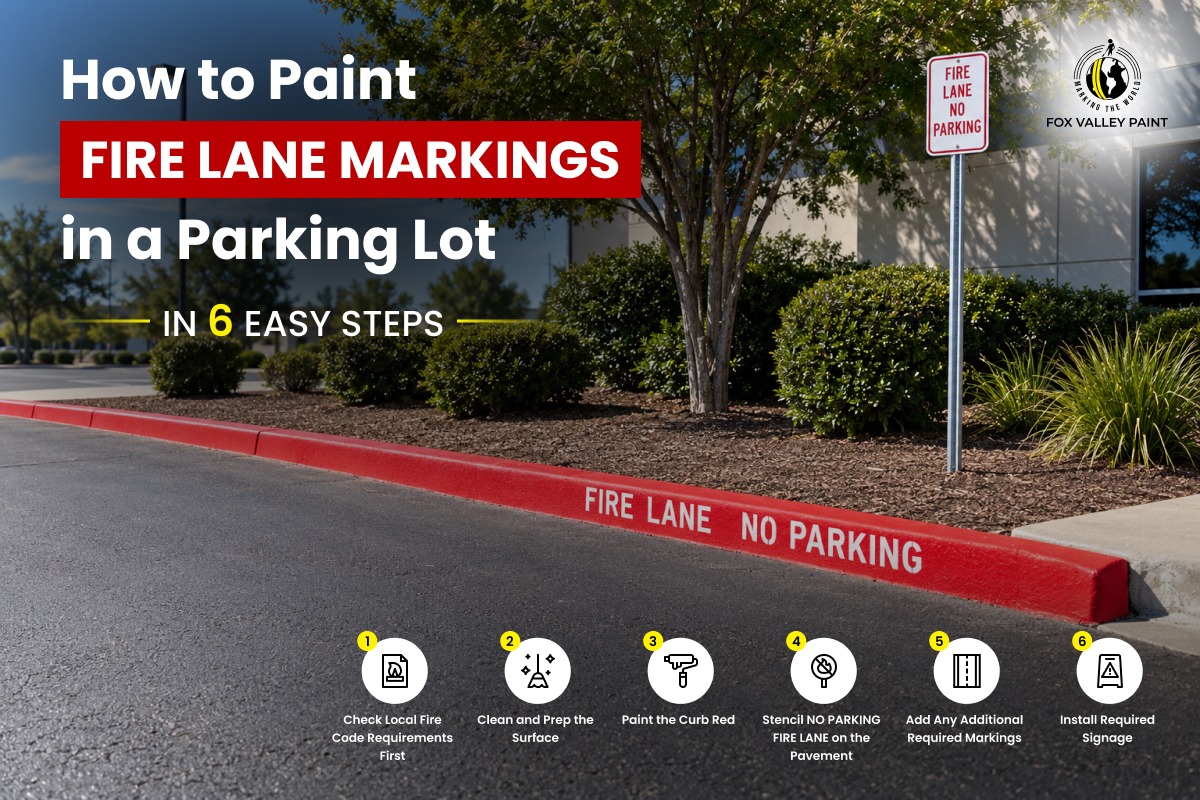
Check Local Fire Code Requirements First
Before buying a single can of paint, contact your local fire marshal or building department. Confirm the required curb color, pavement text wording, letter height, text repeat interval, and whether diagonal hash marks or signs are required in your jurisdiction. Taking 20 minutes to confirm these details prevents repainting the entire lot because one requirement was missed.
Clean and Prep the Surface
Sweep all debris from the curb face and surrounding pavement. Degrease any oil spots on the curb or lane surface and allow everything to dry completely. Paint applied to a dirty or wet surface will not bond and will peel within weeks. Check the full parking lot surface prep guide before starting.
Paint the Curb Red
Apply red traffic striping paint to the full face of the curb along the entire fire lane length. Hold the can 12 to 14 inches from the curb face and apply in one steady even pass from end to end. Most jurisdictions require the entire vertical curb face painted, not just a stripe along the top. Allow full drying before moving to pavement text.
Stencil NO PARKING FIRE LANE on the Pavement
Position your fire lane stencil on the pavement surface parallel to the curb. Most jurisdictions require the text to appear every 50 feet along the lane. Hold the stencil flat against the surface to prevent paint bleed under the edges, then apply white or yellow traffic marking paint through the stencil openings in a smooth even pass. Allow full drying before moving the stencil to the next position.
For planning the full lot layout before any painting begins, see our parking lot layout for striping guide.
Add Any Additional Required Markings
Some jurisdictions require red diagonal hash marks painted on the pavement inside the fire lane to reinforce the no-parking restriction. Others require directional arrows or specific lane boundary lines. Apply these markings using a line striping machine for consistent width and straight lines on every pass. Freehand application risks uneven lines that look unprofessional during a fire inspection.
Install Required Signage
Paint alone is not legally sufficient for fire lane enforcement in most US jurisdictions. Posted signs reading FIRE LANE NO PARKING TOW AWAY ZONE must be mounted at intervals specified by your local code, typically every 50 to 100 feet. Signs must be visible from inside a parked vehicle. Install signage before considering the fire lane complete and ready for inspection.
Fox Valley’s professional-grade traffic striping paint is available in red for curbs and white or yellow for pavement text. Fast-drying, solvent-based formula bonds to asphalt and concrete in a single pass.
Fire lane requirements vary significantly between municipalities. A color, text size, or repeat interval that passes inspection in one city may fail in the next. Always confirm requirements before purchasing paint.
Hardware store red spray paint is not the same as traffic-grade red. Traffic striping paint in red is formulated for outdoor pavement and curb applications, resists UV fading, and bonds to concrete and asphalt under all weather conditions.
Most jurisdictions require posted fire lane signs in addition to painted curbs and pavement text. Without the required signs, fire lane violations cannot be enforced and your lot will fail inspection.
Letters under 12 inches or text spaced more than 50 feet apart may not meet code in your jurisdiction. Both issues are commonly flagged during fire inspections and require repainting to pass.
Fire lanes must maintain a clear 20-foot minimum width. Plan fire lane placement during the initial lot layout before any painting begins. See the DIY parking lot striping guide for the full planning process.
Fox Valley’s Parking Lot Starter Kit includes professional-grade traffic paint and a precision striping machine to handle your full lot including fire lane markings, stall lines, and ADA spaces. No contractor needed.
Fire lane curbs are painted red in most US jurisdictions. Pavement text is typically white or yellow. Always confirm with your local fire marshal before painting since requirements vary by municipality.
Most jurisdictions require NO PARKING FIRE LANE painted on the pavement surface at regular intervals. Some also require FIRE LANE on the curb face. Exact wording, letter size, and repeat interval vary by state and municipality.
Most fire codes require a minimum 20-foot clear width for fire apparatus access. Some jurisdictions require up to 26 feet. Check your local fire code or contact your fire marshal for the exact requirement before planning your lot layout.
Yes. Most jurisdictions require posted signs in addition to painted markings. Paint alone is not sufficient for fire lane enforcement. Signs must typically read FIRE LANE NO PARKING TOW AWAY ZONE and be mounted at intervals visible from inside a parked vehicle.
Yes. With the correct red traffic striping paint for curbs, white or yellow paint for pavement text, proper stencils, and knowledge of your local fire code, fire lane markings can be applied without a contractor. A line striping machine ensures straight, consistent pavement lines every time.