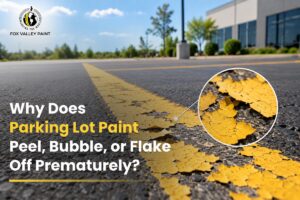

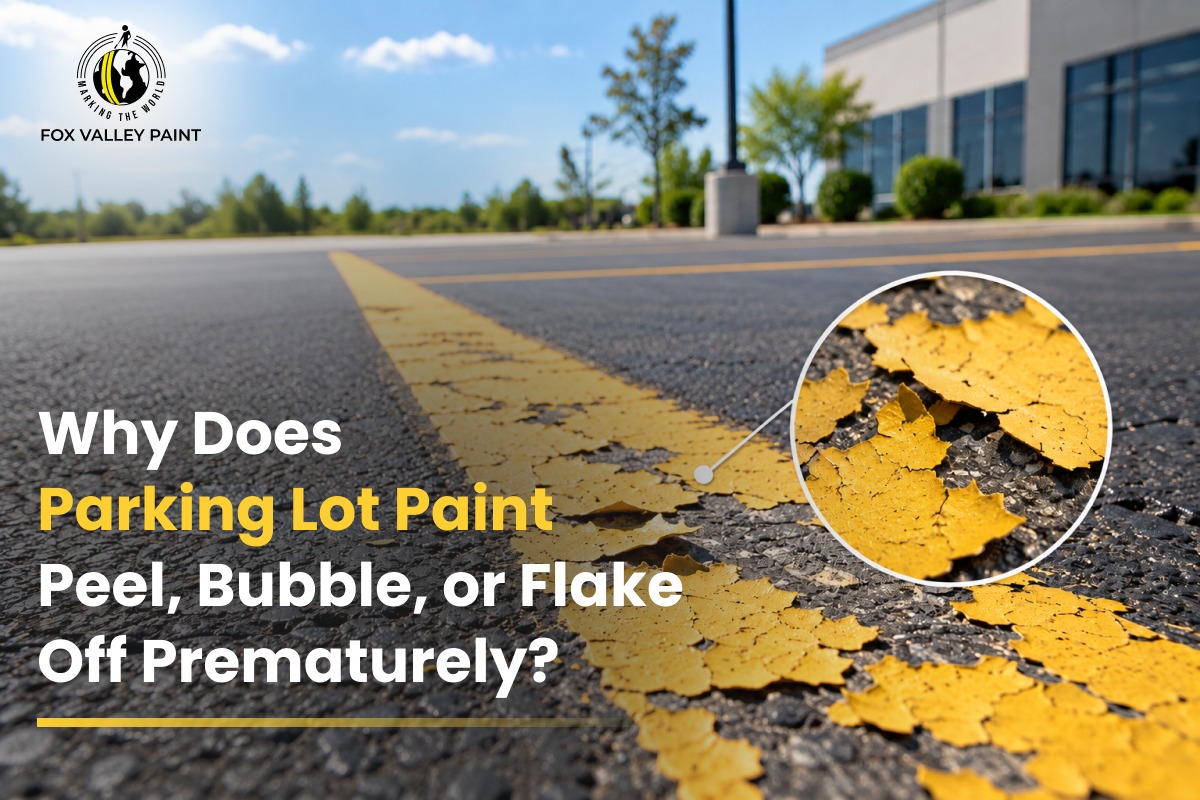
Parking lot paint peeling within weeks or months of application is one of the most common complaints from property owners who stripe their own lots. The frustrating part is that the paint itself is almost never the problem. Premature peeling, bubbling, and flaking trace back to one of seven preventable mistakes made before or during the painting process. This guide identifies each cause and gives you the exact fix so your next paint job stays bright for 12 to 24 months.
The short answer: Paint peels when it cannot form a proper bond with the surface. The bond breaks because something physically prevented adhesion wet surface, wrong temperature, contamination, the wrong paint type or because traffic was allowed on the lines before full cure. All seven causes below are preventable.
Water on or absorbed into asphalt creates a barrier between the paint and the pavement. Even a surface that looks dry after rain may still hold moisture in its pores for hours. Paint applied to wet asphalt bonds to the water layer, not the surface. Once the water evaporates, the paint lifts with it creating the bubbling and peeling that appears within days of application.
Below 50°F, paint does not atomize or bond properly. Cold slows solvent evaporation, leaving paint sitting on the surface instead of penetrating it. Above 90°F or on sun-heated pavement above 95°F, flash drying occurs the outer skin dries before the paint bonds underneath. Both conditions look acceptable on day one and begin peeling within weeks.
Traffic marking paint bonds to asphalt and concrete by penetrating the surface texture. Oil spots, tire rubber deposits, dust, or loose gravel sit between the paint and the pavement and prevent contact. The result is paint that bonds to the contamination layer rather than the surface then lifts as soon as the contamination loosens under traffic.
Hardware store aerosol spray paint is not designed for outdoor pavement. It is water-based, has no UV resistance, and uses binders that break down under vehicle traffic and temperature changes. Most general aerosols show significant fading within 4 to 6 weeks on asphalt and begin flaking within 2 to 3 months. This is the most common cause of paint failure on DIY parking lot jobs.
Fresh asphalt contains oils and solvents that off-gas as the surface cures and oxidizes. Painting before this process completes traps gases under the paint layer. As they expand, they push the paint off from below — creating the classic bubble pattern that peels at the edges within days. This failure mode is extremely common on newly paved lots where the owner wants lines painted immediately.
Fresh asphalt contains oils and solvents that off-gas as the surface cures and oxidizes. Painting before this process completes traps gases under the paint layer. As they expand, they push the paint off from below — creating the classic bubble pattern that peels at the edges within days. This failure mode is extremely common on newly paved lots where the owner wants lines painted immediately.
Each repaint adds thickness to the existing paint film. After 4 to 5 seasons of restriping over old lines, the accumulated layers become brittle, lose flexibility in temperature changes, and crack and peel at the edges pulling newer coats off with them. This is common in lots maintained for 5 or more years without ever removing old lines before repainting.
Drying and curing are not the same thing. Traffic striping paint dries to the touch in under 10 minutes but does not fully cure develop its maximum hardness and adhesion for up to an hour under ideal conditions. Vehicles driving or parking on lines before full cure compress and smear the paint surface, breaking the bond before it has fully set. The damage is invisible at first and becomes visible as peeling within the first few weeks.
Fox Valley’s professional-grade traffic striping paint is solvent-based, UV-resistant, and formulated to bond to asphalt and concrete in a single pass. Built for outdoor pavement not a substitute for it.
If your paint has already started peeling, the fix depends on how widespread the damage is. Never paint directly over peeling sections the new coat will fail in the same spots within weeks.
For the correct repainting process once peeled sections are addressed, see our full guide on how to repaint faded parking lot lines. For planning a full lot repaint including material quantities, use our parking lot paint calculator.
The Fox Valley Starter Kit includes professional-grade traffic paint and a precision striping machine. The right paint, the right equipment, and the technique guides to make sure your next repaint job stays bright for 12 to 24 months.
The most common causes are a wet or contaminated surface at the time of application, wrong temperature, wrong paint type, or traffic on the lines before full cure. The paint itself is rarely the problem.
No. You must remove all loose and peeling paint first. Painting directly over peeling sections traps the failed layer underneath and the new coat will peel in the same spots within weeks.
Quality solvent-based traffic striping paint lasts 12 to 24 months under normal conditions. High-traffic lots may need restriping annually. Paint that fails in under 3 months almost always has an application or surface prep issue, not a paint quality issue.
Yes, significantly. Paint applied outside the 50°F to 90°F range bonds poorly from the start and fails much sooner than paint applied in correct conditions. Check the temperature guide before every application.
Use solvent-based traffic striping paint formulated specifically for asphalt and concrete. Avoid water-based aerosols and hardware store spray paint which break down rapidly under UV exposure and vehicle traffic regardless of how carefully they are applied.