
Knowing how to repaint faded parking lot lines without tearing out the existing paint first is the most searched restriping question among property managers, school staff, and business owners with aging lots. The good news: in most cases you do not need to remove the old lines at all. The right surface preparation, the right paint, and the 5-step process below let you paint directly over faded stripes and get results that look freshly striped from the very first pass.
Yes, with conditions. The key factor is how faded the existing paint is and whether it is still flat against the surface. Here is when it works and when it does not.
If the old lines are too thick or raised, grinding or pressure washing them off first produces a cleaner, longer-lasting result. Check the full parking lot surface prep guide to confirm which situation applies to your lot before buying paint.
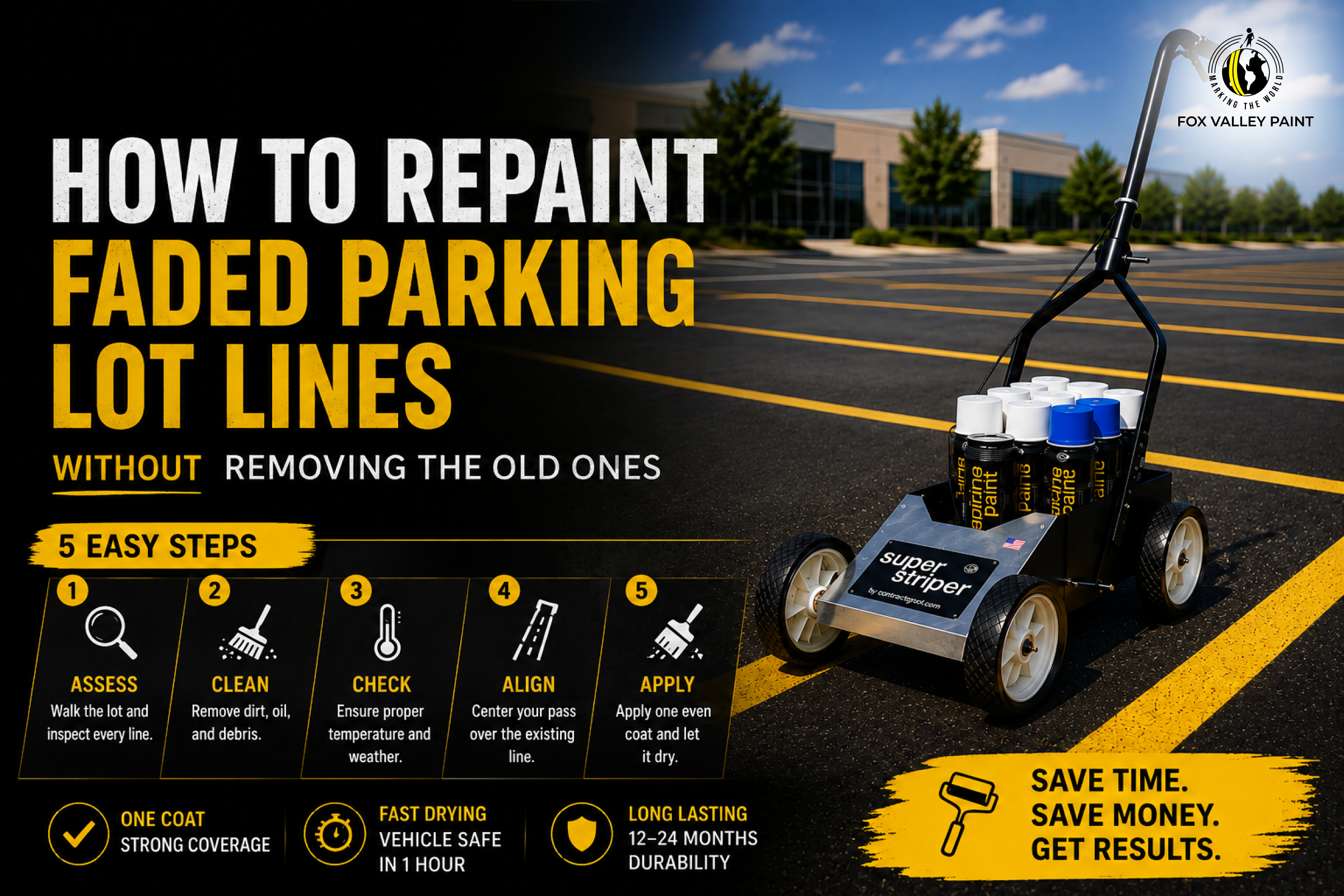
Before opening a single can, walk the entire lot. Mark any spots where old paint is peeling, lifted, or visibly thick from previous repaints. Those sections need spot treatment first. Lines that are simply faded, still visible but no longer bright, are ready to paint over directly. Catching problem areas before you start prevents wasted paint and poor adhesion.
Sweeping alone is not enough. Use a leaf blower first to clear dust and loose debris, then inspect for oil stains, tire marks, and grease deposits. Any contamination between the old line and the new coat weakens adhesion and causes early peeling. Treat oil spots with a degreaser, scrub, and rinse. Allow the surface to dry completely. Wet asphalt prevents bonding regardless of paint quality.
The full surface prep checklist covers every scenario including concrete lots and sealcoated surfaces.
Painting in the wrong conditions is the single most common cause of premature fading on a repaint job. Both air and pavement surface temperature must be between 50°F and 90°F. No rain should be forecast for at least 2 hours after application. Pavement above 95°F causes flash drying. The top layer skins over before the paint bonds underneath, producing lines that look fine on day one and peel within weeks.
Check our spray striping paint temperature guide and confirm all conditions are met before you start. If even one fails, wait.
The new stripe must follow the exact same path as the faded line beneath it. Even a half-inch offset creates a visible double-line effect from any angle. Choose one of these two alignment methods:
Align the guide wheel against the edge of the faded line. The line striping machine holds the can at a fixed height and sprays a consistent width on every pass.
Snap a chalk line centered directly over the faded line before spraying. The chalk acts as your visual guide and disappears once the new paint dries. Hold the can 14 to 18 inches above the surface.
One complete pass at the correct distance is enough for most repaints over existing paint. The old coat reduces the amount of paint needed for full opacity. Move at a steady walking pace. Slowing down creates heavy buildup, speeding up thins coverage and leaves gaps.
Quality aerosol traffic striping paint dries to the touch in under 10 minutes and is vehicle-safe within one hour. Keep traffic off until fully dry.
Fox Valley’s Traffic Super Striper Starter Kit includes a precision line striping machine and professional-grade solvent-based traffic paint everything you need to repaint a full lot without hiring a contractor. Free shipping. Ships same day.
Repainting over old lines resets the clock but the same factors that faded the original coat will fade the new one unless you address them.
Solvent-based traffic marking paint lasts significantly longer under vehicle traffic than water-based alternatives or hardware store spray cans. The solvent formula bonds more aggressively to old paint and bare asphalt, resists UV degradation, and holds up through freeze-thaw cycles that crack water-based coats in northern climates.
The Federal Highway Administration recommends maintaining visible pavement markings as a basic safety requirement for any lot open to the public. Most lots need restriping every 12 to 24 months. High-traffic lots need it annually. Read the full guide on how long parking lot paint lasts and what conditions push lifespan toward the longer end.
Freehand aerosol cans waste 20 to 30 percent more paint per pass than a machine-guided application. A line striping machine produces thicker, more uniform coverage on every coat, which directly extends how long the line stays visible under daily traffic. See the full DIY parking lot striping guide for machine setup instructions from start to finish.
Spring and fall offer the ideal combination of moderate temperatures and lower UV intensity. Lines painted during peak summer UV fade faster because sunlight breaks down the pigment binders more aggressively. If you must stripe in summer, read our guide on striping in summer heat and plan for early morning application before asphalt surface temperatures peak.
The Fox Valley 12-Can Parking Lot Starter Kit includes enough professional-grade traffic paint for lots up to 50 spaces, plus the precision striping machine to apply every line straight and even. No contractor. No guesswork.
Yes. If the existing lines are faded but flat and not peeling, you can apply new traffic striping paint directly over them. The faded coat acts as a base layer and helps the new paint bond more effectively than bare asphalt alone.
Lifespan is the same typically 12 to 24 months depending on traffic volume, weather, and UV exposure. Read the full breakdown of how long parking lot paint lasts and what conditions push lifespan toward the longer end of that range.