

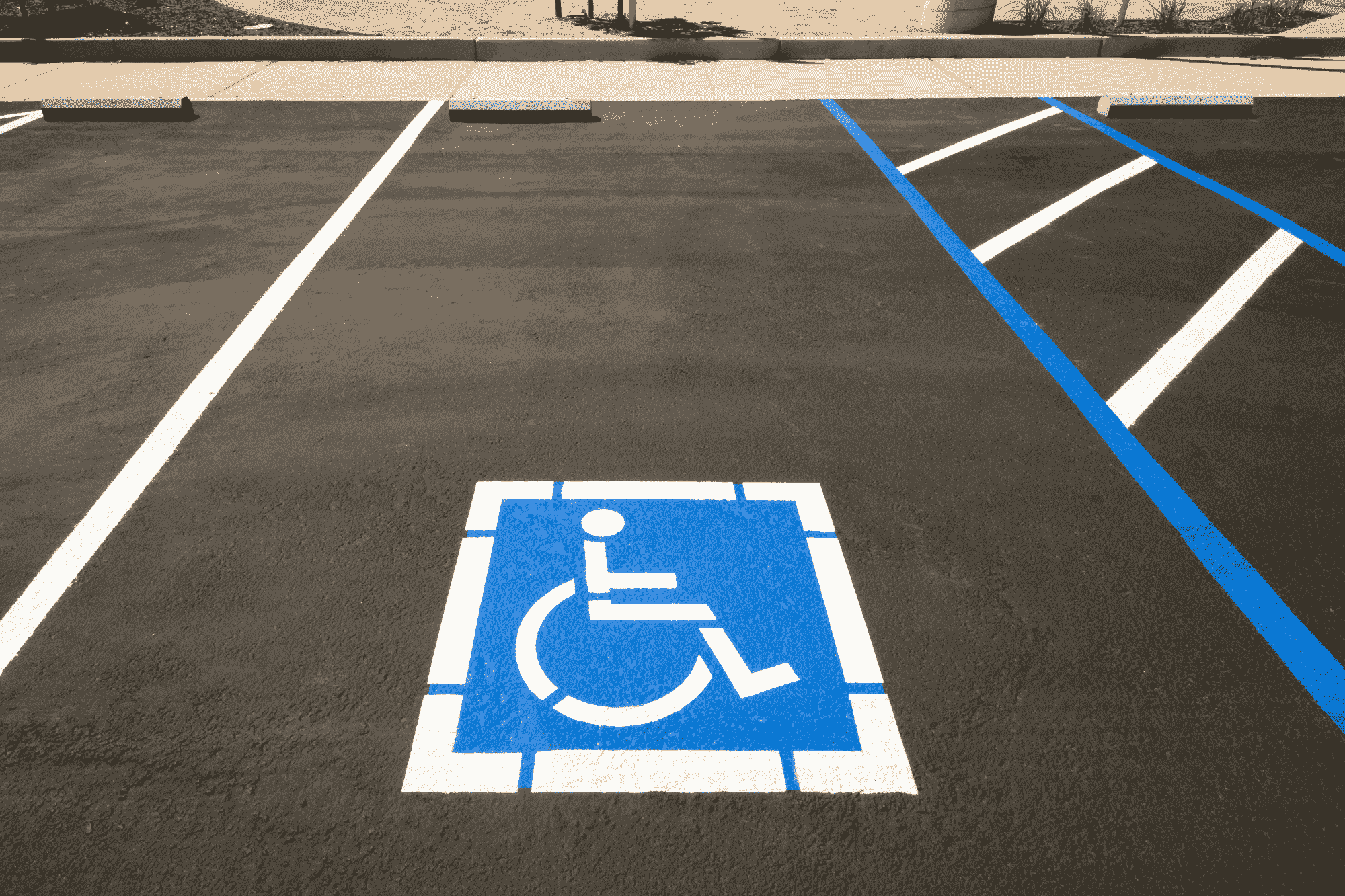
ADA-compliant parking spaces with blue markings are more than just a nice-to-have aesthetic option. They’re a legal requirement that protects both your business and the people who need accessible parking. Getting this wrong can turn into an expensive lesson you don’t want to learn the hard way.
The Americans with Disabilities Act (ADA) mandates that businesses, nonprofits, and state/local governments make parking accessible to individuals with disabilities.
Although the federal law does not specifically require blue paint, the paint used to mark accessible parking spaces and walkways must contrast the paint used to stripe the rest of the parking spaces, and blue and white are common non-contrasting colors.
Here’s the thing: blue has become the universal language of accessibility. Blue is the standard color most states and cities have chosen since it displays the greatest visual contrast with asphalt-type surfaces. When a customer who has mobility problems drives in your lot, the blue stallings can be used as a visual reminder that there is accessible parking there.
Contrast Requirements: Your blue paint for asphalt must create sufficient visual contrast against the pavement surface. This isn’t subjective; there are actual measurement standards that inspectors can verify.
Durability Standards: ADA striping regulations require markings that can withstand weather, traffic, and normal wear without fading below compliance thresholds.
Dimensional Accuracy: The appropriate space dimensions, which are normally 8 feet wide for regular accessible spaces and 11 feet wide for van-accessible spaces, plus necessary access aisles, must be precisely indicated by the blue markings.
Symbol Integration: While not federally mandated, most jurisdictions require the international symbol of accessibility within the blue markings. This symbol must be properly sized and positioned according to local codes.
Smart property managers understand that ADA compliance isn’t just about avoiding lawsuits; it’s about creating genuinely welcoming spaces for all visitors. Well-maintained blue markings send a clear message that you value accessibility and pay attention to details.
Consider the complete accessibility picture when you’re planning your striping project:
When you’re ready to refresh your parking lot’s blue markings, paint quality makes a significant difference in both compliance and cost-effectiveness. High-quality blue paint for asphalt typically costs more upfront but delivers superior durability, better color retention, and longer compliance periods.
Professional-grade marking paints are specifically formulated for asphalt surfaces and can maintain their vibrant blue color and crisp lines for years, even under heavy traffic and harsh weather conditions. This means fewer restriping projects and consistent compliance over time.
The best time to address ADA compliance is before you have a problem. Regular parking lot inspections should include checking your blue markings for fading, damage, or dimensional accuracy. If you notice any issues, addressing them quickly costs far less than waiting for a formal complaint or citation.
The federal ADA does not specify blue by name, but it requires parking markings to visually contrast with the pavement. Blue has become the nationwide standard because it contrasts best against asphalt, and most states formally require it.
For lots with fewer than 25 spaces, one accessible space is required. As the lot size grows, the number of required spaces increases. At least one of every six accessible spaces must be van-accessible.
Standard accessible spaces must be at least 8 feet wide. Van-accessible spaces require 11 feet of width. Both must include proper access aisles alongside them to allow safe wheelchair and mobility device use.
The ADA requires permanent signs at every accessible space. Most local jurisdictions also require the International Symbol of Accessibility painted on the pavement inside the space. Always verify your local code for size and placement rules.
Most parking lots need restriping every 18 to 36 months. High-traffic lots may need it annually. If markings are faded or hard to read in daylight, that is a sign it is time to refresh before falling out of compliance.