

A faded parking lot with worn-out lines looks unprofessional and creates confusion for drivers and visitors. Learning how to stripe a parking lot correctly saves money and creates a better first impression for everyone who visits your property. The good news is that doing it right does not require professional help if you follow the right steps
Surface preparation makes or breaks the entire striping job. Old paint, dirt, oil stains, and debris must be removed before applying new lines. A pressure washer works best for cleaning the asphalt surface thoroughly.
Check for cracks and potholes before starting. These need to be filled and repaired first. Paint won’t stick properly to damaged surfaces, and the lines will look messy. Give repairs at least 24 hours to cure before moving forward.
Mold and mildew can prevent paint from bonding to asphalt. A simple cleaning solution of water and bleach removes these growths. Spray it on, let it sit for a few minutes, then rinse thoroughly. The surface must be completely dry before painting begins.
Measuring and marking come before any paint touches the ground. Use a measuring wheel or tape to determine parking space dimensions. Standard spaces are 9 feet wide and 18 feet long, though this can vary based on local codes.
Chalk lines help create straight guides for painting. Snap these lines carefully to mark where each stripe will go. Taking extra time here prevents crooked lines that ruin the professional look you’re trying to achieve.
Think about traffic flow and pedestrian safety when planning the layout. Mark crosswalks, handicap spaces, fire lanes, and loading zones. Blue paint designates handicap spots, while yellow shows fire lanes and no-parking zones. White or yellow paint works for regular parking spaces.
The type of paint matters when you stripe a parking lot. Water-based acrylic paint has become popular because it dries fast and lasts long. It also contains fewer harmful chemicals than older paint types.
Low-VOC parking lot paint offers environmental benefits without sacrificing quality. VOC stands for volatile organic compounds, which contribute to air pollution. These newer formulas reduce environmental impact while still providing durable, long-lasting lines.
Green asphalt paint solutions have gained attention in recent years. Bio-based traffic paints made from renewable resources work just as well as traditional options. They meet performance standards while being better for the planet and the people applying them.
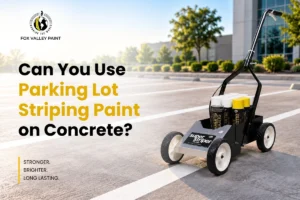
A proper striping machine makes the job easier and produces better results. Walk-behind stripers work well for smaller lots. These machines keep paint flowing evenly and help maintain consistent line width.
Adjust the spray tip based on the line width needed. Standard parking space lines are typically 4 inches wide. Handicap spaces often use wider lines for better visibility. Test the sprayer on cardboard before starting to make sure the width is correct.
Keep a steady walking pace while stripping. Moving too fast creates thin, patchy lines. Going too slow wastes paint and creates thick, messy edges. Practice on a test area first to find the right speed.
Everything you need to stripe your parking lot like a pro.
Stencils help create uniform symbols for handicap spaces, arrows, and other markings. Place the stencil firmly against the asphalt and spray paint through the openings. Lift carefully to avoid smudging.
Glass beads can be added to wet paint for better nighttime visibility. These tiny reflective beads catch headlight beams and make lines easier to see in the dark. They’re especially important for parking lots that stay open after sunset.
A faded parking lot with worn-out lines looks unprofessional and confusing. Learning how to stripe a parking lot correctly saves money and creates a better first impression for visitors. The good news is that doing it right doesn’t require professional help if you follow the right steps.
Striping a parking lot correctly the first time saves money, improves safety, and creates a professional appearance that makes a lasting impression on every visitor. By preparing the surface properly, planning the layout accurately, choosing the right paint, and using the correct equipment and technique, without hiring a contractor. Fox Valley Paint’s Traffic Starter Kit gives you everything you need to get the job done right. For questions or to place an order, contact Fox Valley Paint at (844) 627-5255.
Properly striping a parking lot involves 5 key steps: cleaning and preparing the surface, repairing cracks and potholes, planning and measuring the layout with chalk lines, setting up and using the walk-behind striping machine at a steady pace, and adding finishing touches like stencils for special markings and glass beads for nighttime visibility.
Standard parking lot lines are 4 inches wide. Standard parking spaces are 9 feet wide and 18 feet long. Accessible or handicap parking spaces must be a minimum of 8 feet wide with a 5-foot access aisle. Always verify dimensions with your local municipal codes before striping as requirements can vary by region.
Water-based acrylic traffic marking paint is the most widely recommended option for parking lot striping. It dries fast, bonds well to asphalt and concrete, and contains fewer harmful chemicals than older paint types. For high-traffic lots or harsh weather conditions, solvent-based traffic striping paint offers stronger adhesion and longer-lasting durability.
Parking lot striping paint is touch dry in 10 to 20 minutes, ready for light foot traffic in 30 minutes, and ready for light vehicle traffic in 1 hour. Full cure takes 24 hours. Avoid opening the lot to heavy vehicle traffic until the paint has fully cured to prevent smearing and premature wear.
Parking lot lines should be repainted every 12 to 24 months depending on traffic volume, weather exposure, and UV intensity. High-traffic commercial parking lots may need restriping every 12 months while lower-traffic lots in mild climates can go up to 24 months between restriping jobs.
Yes. With the right equipment and materials, any property owner or facility manager can stripe a parking lot without hiring a contractor. The Fox Valley Paint Traffic Starter Kit includes professional-grade aerosol traffic marking paint and a precision walk-behind line striping machine, giving you everything you need to achieve clean, durable, professional-quality parking lot lines on your own.